
העורך Editor
גֵּר יִהְיֶה זַרְעֲךָ ולא תושב – יהודי הגלות עוד *מאריכים* את הגלות
כלי יקר (שמות י”ב מ”א):
שלשים וארבע מאות שנה. פירש”י שמנה מזמן ברית בין הבתרים, ומהרי”א פירש שנתוספו להם ל’ שנה בחטאם, כי היו ישראל במצרים רעים וחטאים, כמ”ש ביחזקאל (כה.) ואודע להם בארץ מצרים וגו’, ואומר אליהם איש שקוצי עיניו השליכו. ולי נראה להוסיף ולומר שתוספת זמן זה בא להם לפי שרבים המה עמי הארץ אשר לא רצו לצאת כלל ממצרים שהרי בעבור זה מתו ד’ חלקים בג’ ימי אפילה, וראיה לזה מהא שנאמר ומושב בני ישראל אשר ישבו בארץ מצרים, כל אריכות זה למה לי כי היה לו לומר ומושב בני ישראל בארץ מצרים ת”ל שנה, אלא שר”ל שהקב”ה אמר לאברהם כי גר יהיה זרעך גרים ולא תושבים, והמה לשואה יבקשו להיות תושבים בארץ ולא לצאת משם, ז”ש אשר ישבו במצרים ר”ל אותן בני ישראל אשר ישבו להם ישיבה של קבע כתושבים בארץ מצרים המה גרמו אל מספר ת”ל שנה, כי בעבורם נתארך הקץ עד שלבסוף נתרצו לצאת חלק חמישי לפחות, ויובן מזה שלא היתה ישיבתם שמה ת”ל שנה אלא ישיבתם שמה כתושבים גרם מספר ת”ל.
ואולי יש שבועה ע”ז ג”כ, מרש”י כתובות, ושלא ירחקו את הקץ, “בעונם”…
Do Many People Even Hold This Delusion Anymore?!
“Democracy is the illusion that you and I together have twice the political power of David Rockefeller.”
Anonymous
המעשה שהכי ממחיש מיהו מרן החזון איש
לע”ד: מודעות להלכה בכל מצב.
המעשה הובא בכמה מקומות, נ”ל גם בספר מעשה איש (להלן בצורה ספרותית ולא הלכתית [שכיר יום, חו”מ סו”ס של”ז]):
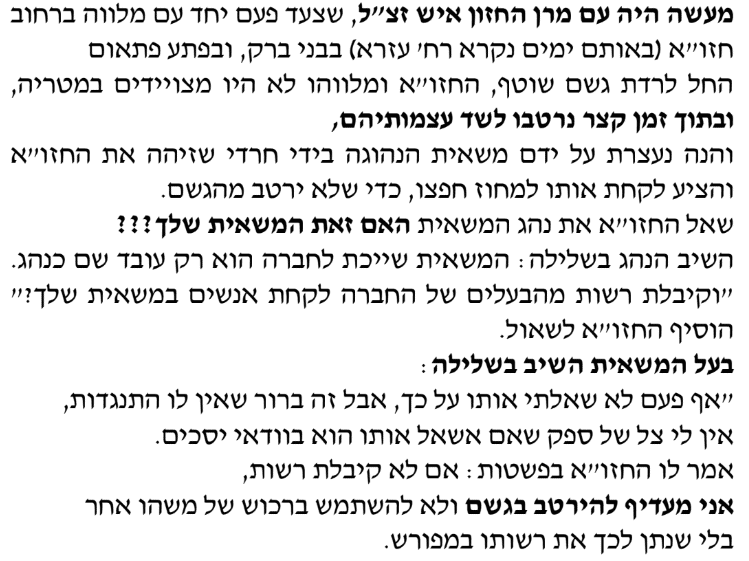
יתכן שהועתק מספר “אנא עבדא” שמרחיב יותר את הסיפור [“כשהגיע אליהם עצר הנהג את המשאית, והזמינם לעלות, תוך שהוא מבהיר שהוא הבעלים של המשאית ורשאי להעלות אנשים לרכב”], ראה כאן.
תפילת הרב סלמן מוצפי זצ”ל למניעת גיוס תלמידי ישיבות לצבא
מתוך ספר אורח צדיקים – קונטרס לשון חסידים:
תפלה לביטול גזירת גיוס בני הישיבות לצבא
יאמר תחילה סדר ‘פיטום הקטורת’ מ: “אתה הוא השם אלהינו” עד “מעלה עשן כל שהוא”, ויאמר תפילה זו:
יְהִי רָצוֹן מִלְּפָנֶיךָ אֲדֹנָי אֱלֹהֵינוּ וֵאלֹהֵי אֲבוֹתֵינוּ שֶׁתִּתְמַלֵּא עָלֵינוּ בְּרַחֲמֶיךָ הָרַבִּים וּתְבַטֵּל מֵעָלֵינוּ וּמֵעַל כָּל עַמְּךָ יִשְׂרָאֵל כָּל גְּזֵרוֹת קָשׁוֹת וְרָעוֹת, וִיהִי רָצוֹן מִלְּפָנֶיךָ שֶׁתִּתְמַלֵּא עָלֵינוּ בְּרַחֲמִים וּרְאֵה בְּעֵין חֶמְלָתְךָ צָרַת נַעֲרֵי בְּנֵי יִשְׂרָאֵל שֶׁהֵם בְּצָרָה גְּדוֹלָה עַל מַה שֶּׁרוֹצִים אַנְשֵׁי הַמֶּמְשָׁלָה לְקַחְתָּם לַצָּבָא, וְתָשִׂים בְּלֶב אַנְשֵׁי הַמַּלְכוּת וְהַשָּׂרִים לְבַטֵּל הַגְּזֵרָה הַזֹּאת מֵעַל נַעֲרֵי בְּנֵי יִשְׂרָאֵל, וּבִסְגֻלַּת לִמּוּדֵינוּ בְּפִטּוּם הַקְּטֹרֶת יִהְיוּ לִמְאוֹרוֹת שֵׁמוֹת ע”ב ס”ג מ”ה ב”ן, וְיָשִׂימוּ מַר לְמָתוֹק.
וּבְכֹחַ שֵׁם הַקָּדוֹשׁ [נעורירו”ו] וּבְכֹחַ אֵלּוּ הַשֵּׁמוֹת הַקְּדוֹשִׁים [יְכַוֵּן בָּהֶם בִּלְבַד: רוט”א יוה”ך כל”ך צמרכ”ד] יִנָּצְלוּ וְיִמָּלְטוּ נַעֲרֵי בְּנֵי יִשְׂרָאֵל מֵהַצָּבָא, וְתִשְׁמֹר אוֹתָם מֵעַתָּה וְעַד עוֹלָם. וּבְכֹחַ שֵׁם [קר”ע שט”ן] וְחִלּוּפוֹ שֵׁם [דג”ז בנ”ט] תִּקְרַע רֹעַ גְּזַר דִּינָם וְתָפֵר עֲצַת הָרוֹצִים וּמְבַקְּשִׁים לְקַחְתָּם לַצָּבָא. וּבִסְגֻלַּת שֵׁם [מטטרו”ן] וְחִלּוּפוֹ שֶׁהוּא [יננגפ”ט] תַּכְרִית וְתַשְׁמִיד כָּל הַמַּשְׁחִיתִים וְכָל הַמְקַטְרְגִים עַל נַעֲרֵי בְּנֵי יִשְׂרָאֵל, כְּאַרְיֵה תִּשְׁאַג לְעֻמָּתָם שֶׁלֹּא יְקַטְרְגוּ עֲלֵיהֶם וְיִהְיוּ לִמְאוֹרוֹת אַרְבַּע אוֹתִיּוֹת הֲוָיָ”ה וְיִתְמַתְּקוּ הַדִּינִים. וּלְמַעַן זְכוּת שִׁבְעָה כּוֹרְתֵי בְּרִית שֶׁהֵם אַבְרָהָם יִצְחָק יַעֲקֹב מֹשֶׁה אַהֲרֹן פִּינְחָס וְדָוִד הָגֵן וְהָסֵךְ עַל נַעֲרֵי בְּנֵי יִשְׂרָאֵל בְּרַחֲמֶיךָ הָרַבִּים.
יִהְיוּ לְרָצוֹן אִמְרֵי פִי וְהֶגְיוֹן לִבִּי לְפָנֶיךָ אֲדֹנָי צוּרִי וְגֹאֲלִי.