
A Touching Article on Government Housing

Two Kinds of Slums

Some Venezuelan families live in terrible slums, but without government subsidies, they have incentives to get out.

Gary North is president of the Institute for Christian Economics.

Back in 1980 I was invited to lecture to a group of people on a cruise ship tour of the Caribbean. I got a free trip on The Love Bloat. Food, food, food!

I even got food for thought. Part of the trip involved a brief visit to Caracas, Venezuela. The ship had docked about an hour north of the city, and tour buses carried us to the capital.

On the outskirts of Caracas, along the side of a hill, there was a slum like no other I had ever seen before, or have ever seen since. As we sped past, we could see it in the distance, but a pair of binoculars brought it much closer. It was nothing but a mass of corrugated steel shacks crammed together.

Later, I read about these mountainside “towns.” They have no plumbing. They are crowded with people who somehow get rides into the teeming and booming city miles away and far below. Serious diseases frequently spread through these little communities. I cannot imagine having to live in such conditions.

Someone on the bus said to no one in particular, “How incredibly ugly!” I thought about that statement for the rest of the drive into the city. I have thought about it from time to time ever since. Yes, that conglomeration of shacks was ugly. Aesthetically, it was an affront to our sensibilities.

Yet such ugliness is cause for rejoicing. It is the mark of freedom. When such ugly slums spring up, without any master plan, and without any government money, we know that free men are doing their best to find a better place to live, a better way to live. Most of all, we can be sure that they are making plans to get out.

Freedom Has Its Ugly Side

The well fed visitor from the United States thinks to himself, “What a terrible place to live.” He can see how bad it is. He shudders at what he sees. But what about the places he cannot see? What about “the places back home” that every slum-dweller left, shaking the dust off his or her feet? The rustic, dirt-floor huts in some isolated village where there is no promise of a better life and no memory of one, either. The charming village graveyards that have so many graves for children under the age of five. The lovely streams in which there are insufficient fish to feed a growing population. The village square in which there are no newspapers reporting on urban blight because there is neither literacy nor electricity to print a newspaper.

People leave these quaint, rustic settings with all of their picture-postcard beauty, and they head for the city. They have been doing this in the West since about the 11th century. This flood of immigrants has increased exponentially since the late 18th century. They come without capital, urban skills, or education. They could go home, but few do. They prefer to live in corrugated steel shacks on the sides of mountains. Why?

To them, the ugliness of the slum is the beauty of freedom. The slum is suffused with hope. It is a place of temporary refuge. A better world lies ahead, down that mountain. Residents of a mountainside slum can see a better world, literally. And seeing it, they can begin to make plans for getting off the mountain forever.

The mountainside slum will remain, but most of its present residents will eventually move out. There are two ways to move out: forward or backward. They can move closer to the city or back to the village. Their continuing presence in the slum announces to the world: better to stay in a slum with their dreams than to return to a village defeated. Because freedom’s slum offers people real hope of moving forward, they do not move back.

Housing in a slum is all that these newcomers can afford. The government could of course send the army up every mountainside to run the slum-dwellers out. The troops could destroy every shack. In America, this is called “urban renewal.” In a place like Venezuela, it might be called “ecological renewal.” The result is the same: homelessness. For the residents of the slums, slum-clearance could be called “hope removal.”

Housing Without Hope

The government could build public housing for a few people. Not for everyone, but a few. We have seen the fate of such housing projects in the richest nation in history, the United States. Can most of us imagine living in the South Bronx in a housing project?

Housing without hope: this is the ultimate slum. It may (for a time) be fleshly painted. It may (for a time) be clean. It may (for a time) be safe. But if it offers no way to get out, or worse, if it offers a government check to stay put, it offers no hope. And then the paint peels, the filth builds up, and the muggers arrive like locusts.

In New York City, you can see from the turnpikes the empty, burned-out housing projects as you drive by at high speed. (Careful: the next pothole may snap an axle.) Are those slums any less ugly than the mountainside slums of nations too poor to build public housing? More to the point, are they as useful for providing shelter to poor people?

In Venezuela, slum-dwelling families live in terrible conditions. But no one forces them to live there. No government subsidizes them to live there. They do not intend to live there forever. They make plans to get out; they test plans to get out; and eventually, most of them get out.

There are two kinds of slums. I don’t want to live in either kind. But this I know: one kind is worse than another. The one to avoid is the one with the invisible sign over its entrance: “All hope abandon, ye who enter here.”

From the Foundation for Economic Education, here.
קדושת ציון גליון #32

דרישת ציון על טהרת הקודש ◆ דעת תורה בנושאי ארץ הקודש ת”ו

לכל החברים שלום רב!

בשמחה רבה אנו מגישים בפניכם את גליון אגודת “קדושת ציון” לחודש אייר, ובו מאמרים חשובים ומעמיקים בסוגיות שעל סדר היום של יראי ה’ בכל מקום שהם.

גליון זה עוסק הן בשאלות ציבוריות כלליות כגון המאבק על הזהות היהודית בארצנו כיום, הן בנושאים תורניים צרופים אשר גם להם זיקה ישירה לעולם המעשה, כמו מהותם של ימי ספירת העומר וחג השבועות שאחריהם, הן בנושאים של כלל-ישראל והן בעבודה הפרט של כל יחיד. נראה, כי במשך הזמן הצלחנו לגבש עלון מגוון ומאוזן באופן כזה, שכל אחד ימצא בו את המאמרים שהוא יותר מתחבר אליהם לפי נטייתו, ועם זאת גם שאר המאמרים יהיו מעניינים ובעלי משמעות עבור רוב הקוראים.

גליון זה עומד בסימן הועידה השנתית של האגודה. רבים זוכרים את הועידה שהתקיימה בשנה שעברה באולמי “תמיר”. ועידה זו נחלה הצלחה אדירה מבחינת מספר המשתתפים, אשר הפתיע אף אותנו המארגנים, והשנה אנו מצפים לקהל גדול אף יותר, אחר שרבים רבים הצטרפו במהלך השנה האחרונה. השנה תתקיים הועידה באולמי “זוועהיל”, ומעת ירידת גליון זה לדפוס אנו עובדים במרץ למען הצלחתה.

על-אף שבכוונתנו להשתדל להפיק אירוע איכותי ומקצועי ככל הניתן, מטרתה העיקרית של הועידה אינה הענקת תכנים חדשים לבאים בשעריה. איננו משלים את עצמנו, שבערב אחד נצליח להעביר מסרים יותר מאשר בעלון בן 32 עמודים היוצא מדי חודש בחודשו. הדבר החשוב ביותר בועידה הוא עצם הנוכחות של ציבור גדול ואיכותי, אשר יוכיח קודם כל לעצמו, ואחר-כך לציבור בכללו, כי קיימת כאן תופעה שהיא הרבה מעבר לעלון שאנשים אוהבים לקרוא – ישנו ציבור חרדי איכותי וגדול שתומך בדרישת ציון על טהרת הקודש. ככל שהציבור הזה יהיה גדול יותר, כך נזכה ליותר הכרה ציבורית, וכך גם אותם רבים מאד אשר טרם אזרו אומץ להזדהות אתנו בגלוי – יקל עליהם לקום ולומר את האמת הפשוטה שבינתיים נמצאת רק בתוך ליבם.

משום כך חשוב עד מאד להגיע לועידה, אפילו כולנו חכמים, כולנו נבונים, כולנו יודעים בעל-פה את כל הטיעונים אודות גאולה בדרך הטבע ואת הסתירות ל”ויואל משה”. כל אחד שמופיע – משפיע, ומי שמביא אתו אנשים נוספים – השפעתו גדולה לאין ערוך. אין כל ספק, כי רבים יהיו הסקרנים אשר ירצו לדעת כמה אנשים באמת תומכים במהלך הזה של דרישת ציון בקרב הציבור החרדי, ועלינו לעשות הכל על-מנת לתת תשובה מוחצת ביום כינוס הועידה.

שימו לב – הועידה אינה מתקיימת השנה ביום ירושלים עצמו, כי אם שלושה ימים קודם, כך שהיא תכנס אל תוך לילו של היום הראשון למלחמה, אז אירע הנס הגדול של הצלה ממוות לחיים בהשמדת חיל האויר המצרי. באופן זה אנו אכן ניתן תודה לה’ על אותו הנס, ומאידך נמנע מהקושי שהיה בשנה שעברה לאנשים רבים להגיע ביום ירושלים מסיבות שונות ומגוונות טכניות ואחרות. גם מיקום הועידה באולמי זוועהיל אמור להקל על הבאים, בהיותו מקום מרכזי ביותר שקל להגיע אליו.

מכיון שרצוננו לערוך אירוע איכותי, אשר יעשה רושם לזמן רב על הציבור, העלויות הן בהתאם, ואין לי מנוס מלבקש את עזרת ציבור הקוראים במימון הועידה. מדובר בהוצאות שמוערכות בין 12,000 ₪ ל-15,000 ₪, וזאת מלבד ההוצאות השוטפות של האגודה, אשר גם עבורן אנו זקוקים להרתמות של ציבור גדול יותר מאשר מי שתורם עד כה.

על-כן אבוא בבקשה מיוחדת בחודש זה יותר מבכל חודש, שכל מי שיכול יתרום לאגודה לצורך קיום הועידה, וכן לצורך הפעילות השוטפת. הוראות קבע תתקבלנה בברכה מיוחדת במיוחד עבור הפעילות השוטפת. במהלך החודש האחרון התחלנו להפעיל את חשבון העמותה בצורה מסודרת וניתן כעת לעשות העברה בנקאית ישירות לחשבון זה –

קדושת ציון (ע”ר).

בנק המזרחי (20).

סניף העיר העתיקה (459).

מספר חשבון 109491.

כמו-כן ניתן לתרום באמצעות כרטיס אשראי דרך “קהילות” או “נדרים פלוס” במכשירים המוצבים בבתי הכנסת או בקישוריות המובאות להלן –

קהילות

נדרים פלוס

מי שמעוניין לתרום באשראי שלא דרך “קהילות” או “נדרים פלוס” או בכל צורה אחרת – שיצור קשר עם כתובת דוא”ל זו.

בברכה ובצפיה להתראות בועידה,

יהודה אפשטיין.

“קדושת ציון”.

Download (PDF, 2.02MB)

Reprinted with permission.

America’s Fiscal Gap: 200 Trillion Dollars

34 Shocking Facts About U.S. Debt That Should Set America On Fire With Anger

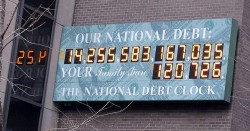
We have all been lied to.  For decades, the leaders of both major political parties have promised us that they can fix our current system and that they can get our national debt under control.  As the 2012 election approaches, they are making all kinds of wild promises once again.  Well you know what?  It is all a giant sham.  The United States has gotten into so much debt that there will be no coming back from this.  The current system is irretrievably broken. 30 years ago the U.S. debt was a horrific crisis that was completely and totally out of control.  If we would have dealt with it back then maybe we could have done something about it.  But now it is 15 times larger, and we are adding more than a trillion dollars to the debt every single year.  The facts that you are about to read below should set America on fire with anger.  Please share them with as many people as you can.  What we are doing to our children and our grandchildren is absolutely nightmarish.  Words like “abuse”, “financial rape”, “theft” and “crime” do not even begin to describe what we are doing to future generations.  We were the wealthiest nation on earth, but it wasn’t good enough just to squander all of our own money.  We had to squander the money of our children and our grandchildren as well.  America has been so selfish and so self-centered that it is hard to argue that we don’t deserve what is about to happen to this country.  We have stolen the future of America, and yet we strut around as if we are the smartest generation that ever walked the face of the earth.

All of this prosperity that we see all around us is just an illusion.  It is a false prosperity that has been purchased by the biggest mountain of debt in the history of the world.

Did you know that if you added up all forms of debt in the United States and divided it up equally that every single family in the country would owe more than $683,000?

We are a nation that is absolutely addicted to debt, and the U.S. debt crisis threatens to destroy everything that our forefathers built.

Yes, everything may seem fine for the moment, but what do you think would happen if the federal government suddenly adopted a balanced budget?

1.3 trillion dollars a year would be sucked right out of the economy and we would be looking at an “economic readjustment” that would be mind blowing.

Enjoy this false prosperity while you can, because it is not going to last.

Debt is a very cruel master, and our day of reckoning is almost here.

The following are 34 shocking facts about U.S. debt that should set America on fire with anger….

#1 During fiscal year 2011, the U.S. government spent 3.7 trillion dollars but it only brought in 2.4 trillion dollars.

#2 When Ronald Reagan took office, the U.S. national debt was less than 1 trillion dollars.  Today, the U.S. national debt is over 15.2 trillion dollars.

#3 During 2011, U.S. debt surpassed 100 percent of GDP for the first time ever.

#4 According to Wikipedia, the monetary base “consists of coins, paper money (both as bank vault cash and as currency circulating in the public), and commercial banks’ reserves with the central bank.”  Currently the U.S. monetary base is sitting somewhere around 2.7 trillion dollars.  So if you went out and gathered all of that money up it would only make a small dent in our national debt.  But afterwards there would be no currency for anyone to use.

#5 The U.S. government spent over 454 billion dollars just on interest on the national debt during fiscal 2011.

#6 The U.S. government has total assets of 2.7 trillion dollars and has total liabilities of 17.5 trillion dollars.  The liabilities do not even count 4.7 trillion dollars of intragovernmental debt that is currently outstanding.

#7 During the Obama administration, the U.S. government has accumulated more debt than it did from the time that George Washington took office to the time that Bill Clinton took office.

#8 It is being projected that the U.S. national debt will surpass 23 trillion dollars in 2015.

#9 According to the GAO, the U.S. government is facing 34 trillion dollars in unfunded liabilities for social insurance programs such as Social Security and Medicare.  These are obligations that we have already committed ourselves to but that we do not have any money for.

#10 Others estimate that the unfunded liabilities of the U.S. government now total over 117 trillion dollars.

#11 According to the GAO, the ratio of debt held by the public to GDP is projected to reach 287 percent of GDP by 2086.

#12 Others are much less optimistic.  A recently revised IMF policy paper entitled “An Analysis of U.S. Fiscal and Generational Imbalances: Who Will Pay and How?” projects that U.S. government debt will rise to about 400 percent of GDP by the year 2050.

#13 The United States government is responsible for more than a third of all the government debt in the entire world.

#14 If you divide up the national debt equally among all U.S. taxpayers, each taxpayer would owe approximately $134,685.

#15 Mandatory federal spending surpassed total federal revenue for the first time ever in fiscal 2011.  That was not supposed to happen until 50 years from now.

#16 Between 2007 and 2010, U.S. GDP grew by only 4.26%, but the U.S. national debt soared by 61% during that same time period.

#17 During Barack Obama’s first two years in office, the U.S. government added more to the U.S. national debt than the first 100 U.S. Congresses combined.

#18 When you add up all spending by the federal government, state governments and local governments, it comes to 46.6% of GDP.

#19 Our nation is more addicted to government checks than ever before.  In 1980, government transfer payments accounted for just 11.7% of all income.  Today, government transfer payments account for 18.4% of all income.

#20 U.S. households are now actually receiving more money directly from the U.S. government than they are paying to the government in taxes.

#21 A staggering 48.5% of all Americans live in a household that receives some form of government benefits.  Back in 1983, that number was below 30 percent.

#22 Back in 1965, only one out of every 50 Americans was on Medicaid.  Today, one out of every 6 Americans is on Medicaid.

#23 In 1950, each retiree’s Social Security benefit was paid for by 16 U.S. workers.  According to new data from the U.S. Bureau of Labor Statistics, there are now only 1.75 full-time private sector workers for each person that is receiving Social Security benefits in the United States.

#24 The U.S. government now says that the Medicare trust fund will run out five years faster than they were projecting just last year.

#25 Right now, spending by the federal government accounts for about 24 percentof GDP.  Back in 2001, it accounted for just 18 percent.

#26 If the U.S. government was forced to use GAAP accounting principles (like all publicly-traded corporations must), the U.S. government budget deficit would be somewhere in the neighborhood of $4 trillion to $5 trillion each and every year.

#27 If you were alive when Chist was born and you spent one million dollars every single day since that point, you still would not have spent one trillion dollars by now.  But this year alone the U.S. government is going to add more than a trillion dollars to the national debt.

#28 If right this moment you went out and started spending one dollar every single second, it would take you more than 31,000 years to spend one trillion dollars.

#29 A trillion $10 bills, if they were taped end to end, would wrap around the globe more than 380 times.  That amount of money would still not be enough to pay off the U.S. national debt.

#30 If the federal government began right at this moment to repay the U.S. national debt at a rate of one dollar per second, it would take over 470,000 years to pay off the national debt.

#31 If Bill Gates gave every penny of his fortune to the U.S. government, it would only cover the U.S. budget deficit for 15 days.

#32 According to Professor Laurence J. Kotlikoff, the U.S. is facing a “fiscal gap” of over 200 trillion dollars in the future.  The following is a brief excerpt from a recent article that he did for CNN….

The government’s total indebtedness — its fiscal gap — now stands at $211 trillion, by my arithmetic. The fiscal gap is the difference, measured in present value, between all projected future spending obligations — including our huge defense expenditures and massive entitlement programs, as well as making interest and principal payments on the official debt — and all projected future taxes.

#33 If you add up all forms of debt in the United States (government, business and consumer), it comes to more than 56 trillion dollars.  That is more than $683,000per family.  Unfortunately, the average amount of savings per family in the U.S. is only about $4,735.

#34 The U.S. national debt is now more than 5000 times larger than it was when the Federal Reserve was created back in 1913.

Continue reading…

From The Economic Collapse, here.