עקב: ה’אור החיים’ הקדוש מגיב לאתיקה של צה”ל

ספר אור החיים על דברים ז’ ט”ז:

ואכלת את כל העמים זו מצות עשה, וגמר אומר אשר ה’ אלהיך נותן לך, הא למדת שאם תתעצלו אתם מואסים במתנת אלהים.

ואומרו לא תחוס עינך וגו’, על דרך אומרו (משלי י”ב י’) ורחמי רשעים אכזרי, פירוש אין זו ממדות הטובות אלא מדה רעה, ולזה מזהיר נגדיות מדה טובה, כי במה שלפנינו אינה אלא רעה.

ואולי שהוצרך להזהיר לא תחוס, לפי שבירך ה’ את ישראל בבנים, ואמרו ז”ל (סנהדרין לו:) שבעל בנים יתרבו רחמיו והראיה שאין ממנים בסנהדרין אלא מי שיש לו בנים, לזה בא מאמר ה’ לנגדיות הטבע שיולד בהם מכח ברכת הבנים.

וגמר אומר ולא תעבוד וגו’, להעירך שרחמנות בדבר זה תוליד מיחוש עבודה זרה, והוא אומרו כי מוקש הוא לך, פירוש העם, שכשאתה חס עליו אתה מתאכזר על עצמך, או פירוש הוא חוזר על הרחמנות אשר צוה עליו לבל יחוס.

A Jew’s Affinitive Partiality for the BEAUTY of the Jewish Homeland

Quoting a story from Mishpacha:

Many years ago, when we lived not far from Niagara Falls, I took my mother, Mrs. Rose Stark a”h, an Auschwitz survivor, to see this wonder. She wasn’t easily impressed, but I was sure that this miracle of nature would finally move her.

She looked around, smiled, and said, “It’s really nice.”

Really nice?

I must have looked disappointed, because she gently explained: “It is beautiful. I see that. But it doesn’t touch my heart.”

Then she added something I never forgot. “When I see something beautiful in Eretz Yisrael — that moves me. It’s like the difference between appreciating the sweetness of other people’s children, and cherishing the nachas of your own.”

My mother lived the last 21 years of her life in Israel, and she never stopped seeing its beauty through that lens — through the heart.

These days, many of us enjoy traveling the world, taking in the wonders Hashem placed across the globe. But we should never lose sight of the wonder in our own land, the beauty of our hills and stones, our people and our paths. The beauty of Eretz Yisrael isn’t just spectacular — it’s personal. It’s the landscape of our story.

הרב משה שטרנבוך שליט”א ושתי הלחם: אוי לזקנותנו שביישה את ילדותנו

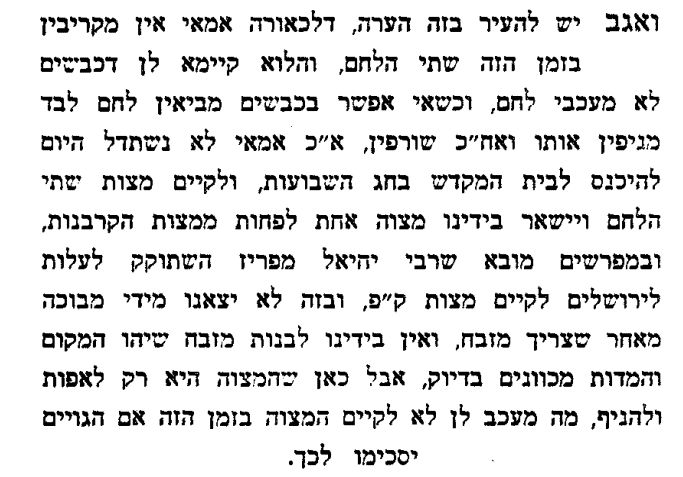
הרב משה שטרנבוך בילדותו עוד קבל עול מלכות שמים ועול מצות מצות שתי הלחם בשבועות, ואף ניסה לגבור על מניעות מעשיות.

הנה ציטוט מתוך ספר מועדים וזמנים חלק ו’ (או ז’?) סי’ רכ”ט, שחיבר הרב שטרנבוך בצעירותו:

והנה המאמר המלא שם (לינק):

Download (PDF, 624KB)

אגב, בענין מחוסר בגדים, הלא הרב משה שטרנבוך בעצמו כבר לובש תכלת בציצית עכ”פ ובצנעא עכ”פ (רשימת עדויות מבוררת נמצאת כאן).

אבל אוי, הנה הרב משה שטרנבוך כעת מפי תלמידיו העלגים (“שני הלחם”) בהתנגדות עקרונית, ללא טעם ומטעמת, וכנראה בלא בירור העובדות:

EIKEV: Life Is Difficult. Once You Accept This, Life Can Be Fun

Listen to Rabbi YY Jacobson’s penetrating Parsha shiur here…

Class Summary:

This women’s class was presented on Tuesday Parshas Eikev, 19 Av, 5779, August 20, 2019 at the Ohr Chaim Shul, Monsey, NY.

The Jewish people are standing at the Eastern side of the Jordan river. They are poised to enter the Promised Land. Their faithful leader, Moshe, speaks to them. These are his words: “Hear, O Israel! Today, you are crossing the Jordan to come in to possess nations greater and stronger than you, great cities, fortified up to the heavens. A colossal and towering nation, the children of the giants, whom you know and of whom you have heard said, “Who can stand against the children of the giants?!”

This is mind-staggering. Moshe is repeating, almost verbatim, the words the Ten Spies uttered 39 years earlier which caused an unparalleled catastrophe, and derailed Jewish history from its course.

Is this for real? After everything they have been through, Moses repeats—as we said, almost verbatim—the terrifying and destructively-impactful words of the spies which sowed terror and dread in all of their brethren hearts!

It is here that we discover the truth of Torah. Judaism does not deny reality; it does not sell us the Brooklyn Bridge. It acknowledged the real fears internal and external hardships, but it also says: Hashem is with you; you can confront every fear. Life is difficult, but if you can accept that, then life can be a lot of fun!

CBT (Cognitive Behavioral Therapy) is a powerful tool, but sometimes it can fail you. It is then that you need another, very different tool — articulated in this story of Eikev.

The lecture is based on an address by the Lubavitcher Rebbe, Shabbos Parshas Eikev, 23 Av, 5731, August 14, 1971.

I think this will repay your time!