
Of the Israeli Airport Arrivals Hall

The Happiest Place on Earth

The happiest place on earth isn’t Disneyland, though I would definitely put Disneyland in the top five. No, I’m convinced that the happiest place on earth is the arrivals hall of Terminal 3 at Ben Gurion Airport. Everyone is happy. Whether they’re waiting in nervous but happy anticipation for their loved ones to land, coming for a visit, home after a visit, or home after a lifetime, everyone is in various stages of euphoria to have landed on Israeli soil. The festivity is enhanced by the myriad balloons on the ceiling. I had wondered how they had gotten there until one time I came to meet my son with a balloon and in my haste to hug him I let it go and it floated up to join its friends.

There’s contained Israeli mayhem as people talk on their cellphones, dogs bark and people squeal and rush to greet their friends and family. The airport workers intermittently try to shoo people back behind the barrier as people stream in from the dozens of flights from all over the world. But they do so half-heartedly knowing it is a lost battle. Israelis are fiercely loyal to their travelling relatives. And then there are the groups on pilgrimage or friends of Israel who come in singing and dancing or beating drums dressed in various costumes. There are the Birthright groups and the tourist groups. People don’t get disconcerted if you shout at them, “Hey, what flight were you on?” And everyone comes out smiling, beaming, grateful.

It’s also a very user-friendly hall. For those of you who’ve never been here (What are you waiting for?), the arrivals hall is in a semi-circle shape with a decorative barrier so that you can see the arrivals and they can see you as soon as they come out of the doors and you don’t get in people’s way if you happen to jump the barrier in your enthusiasm to greet someone. A huge board clearly displays the arrivals and when they’re supposed to arrive and while you’re waiting you’re surrounded by food options. Also, I saw someone bring brownies.

Unlike in bigger city airports, you will invariably meet people you know, or make friends with people waiting. But as I stood watching the hugs and kisses, the greetings and joy, the children gamboling into the arms of waiting relatives, the groups being welcomed and the vestiges of chaos that still, baruch Hashem, give Israel that family flavor, it was clear to me that this was the happiest place on earth, the only tears being tears of joy and the only time, this moment.

Tourism is one of Israel’s biggest industries. Groups coming on aliyah is a frequent news item and the wandering Jew perpetually wanders even if now it’s on a tourist visa. But whatever language you say it in, Welcome Home is always applicable here because there’s no place like home.

ABOUT THE AUTHOR
Rosally Saltsman, originally from Montreal, lives in Israel. Her books include Finding the Right Words, Parenting by the Book, Soul Journey and A Portion of Kindness.

Reprinted from Times of Israel, here.

Do Mussarites Really Expect Jews to Pray for THEIR OWN Destruction?!

Authored by: העורך Editor

The post-censorship faux-“traditional” Siddur reads:

ולמלשינים אל תהי תקוה וכל הרשעה כרגע תאבד וכל אויביך מהרה יכרתו והזדים מהרה תעקר ותשבר ותמגר ותכניע במהרה בימינו. ברוך אתה השם שובר אויבים ומכניע זדים.

Why does Birkas Haminim seem to devote most imprecations against specifically the “Zedim“? And whomsoever could the “Zedim” be? (Let’s not compare Nuscha’os like the Rishonim or the Gra would do, because that would be against our anti-academic late Mesorah fake Torah methodology!)

I heard several Mussar peddlers “explain” this non-problem by referencing the verse “Zed yahir letz shemo”. In other words, scoffers require/deserve extra-special personal care. Sure, there is lots of discussion in Mussar books regarding the flaw of Letzanus, but it must all be intended for Hebraist Goyim

Wait, isn’t that, itself…

Yes, but it’s permissible sarcasm!

Funnily enough, the assumption one refuses to “bless” himself is the sevara behind Shulchan Aruch O.C. 126:1:

ש”צ שטעה ודילג אחת מכל הברכות, וכשמזכירין אותו יודע לחזור למקומו, אין מסלקין אותו; אבל אם דילג ברכת המלשינים, מסלקין אותו מיד, שמא אפיקורוס הוא; ואם התחיל בה וטעה, אין מסלקין אותו.

See Beis Yosef 126 (from here):

ירושלמי ש”צ שדילג ב’ או ג’ ברכות אין מסלקין אותו חוץ ממי שלא אמר תחיית המתים וכו’ בפרק אין עומדין ואיני יודע למה כתבו רבינו מאחר שהוא חולק על תלמוד שלנו דסתם ואמר טעה בכל הברכות כולם אין מעלין אותו חוץ מברכת ולמלשינים וכ”כ הרי”ף והרמב”ם והרא”ש ולא הזכירו הירושלמי הזה כלל וא”ת מ”ש ברכת ולמלשינים מתחיית המתים ובונה ירושלים כבר כתב ה”ר יונה דדוקא ברכת ולמלשינים איכא למיחש שמא אפיקורס הוא ואינו רוצה לקלל את עצמו אבל בתחיית המתים אע”פ שלא יאמין בה אפשר שיאמר אותה דמאי איכפת ליה אם יאמר אותה דלמה ימנע מלאמרה הואיל ואינו מקלל את עצמו הילכך כיון שאפשר שאומר אותה ויהיה אפיקורס ולא נוכל להכיר אותו אפי’ כשלא אמר אותה אין מעלין אותו ע”כ וטענה זו תספיק לומר ג”כ שאין מעלין אותו כשלא אמר בונה ירושלים ואחר שכתבתי זה מצאתי להרשב”א שכתב בתשובה אע”ג דמשמע מדברי הירושלמי שיש לחלק בין ש”צ ליחיד ואפי’ בשטעה והשמיט אחת מן הברכות כדגרסי’ בר”פ אין עומדין ש”ץ שהשגיר ב’ או ג’ ברכות אין מחזירין אותו וכו’ מ”מ כיון שלא מצינו כן בגמרא ולא חילקו בין ש”צ ליחיד אין לנו אלא כגמרתינו.

Although, I have seen that rare halacha ignored, too, so at least we’re being consistent.

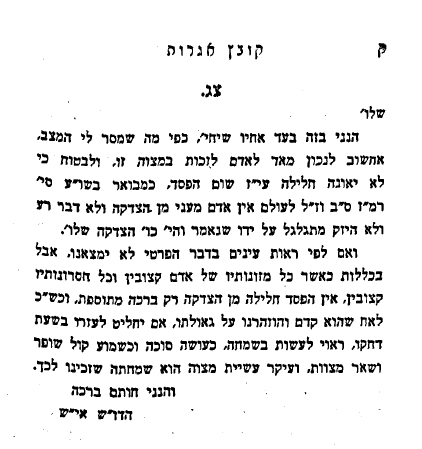
Here is another version of this, copied from a Parsha sheet:

וזהו שאנו מתפללים בשמו”ע “ולמלשינים אל תהי תקוה וכל הרשעה כרגע תאבד וכל אויביך מהרה יכרתו והזדים מהרה תעקר ותשבר ותמגר ותכניע” ומבואר דכשתתגלה כבודו יתברך שמו המלשינים והרשעה מאליהם יכרתו אבל הזדים שהם הליצנים כדכתיב “זד יהיר לץ שמו” (משלי כא כד) לא יכרתו מאליהם אלא תעקר ותשבר ותכניעם ורק אז יכרתו.

The source is Rabbi Mordechai Bunem Zilberberg, Rav of Bnei Brak’s Shikkun Heh. (If he’s Chassidic-leaning, as the language slightly implies, this perhaps illustrates the Chassidus/Mussar Horseshoe Theory*.)

Now, praying against ourselves isn’t so strange if we still say the censorship of “אויביך” (instead of “אויבי עמך“!), too — another category too easy to fall into (at least in the weak sense of the Zohar on צר כחכה, and the like). The nusach in “Asher Heni” used to be “ארורים כל הגוים\הערלים, ברוכים כל היהודים\ישראל” instead of Tzaddikim, Resha’im, etc. as appears today.

Mussar isn’t just intellectually false, it’s anti-intellectual, too!


* “Proponents of horseshoe theory argue that the extreme left and the extreme right are closer to each other than either is to the political center.”

The ‘Divine Passive’: Bureaucratese Is Also About Weaseling Out of Personal Responsibility

Divine Passive Voice

By Jacquelyn Landis

Most writers know the difference between active and passive voice. In active voice, there’s a clearly identified agent performing an action:

Tiger Woods made a hole in one.

The subject of this sentence, Tiger Woods, is the agent who is performing the action: making a hole in one. In passive voice, the subject isn’t performing the action; it’s being acted upon by the agent:

A hole in one was made by Tiger Woods.

Most experts agree that active voice is preferable over passive voice wherever possible, and most writers know this. However, did you know that there’s another form of passive voice? This one is called divine passive voice. In a sentence using divine passive voice, no agent of action is ever identified:

A hole in one was made.

Since there’s no agent, the action in the sentence is considered an act of God—thus, divine passive voice. Granted, this is a tongue-in-cheek assessment because it’s pretty unlikely that the hole in one happened all by itself even though Tiger Woods is sometimes attributed with divinely inspired talent.

Divine passive voice is most useful for obscuring information. Perhaps Tiger didn’t want to buy the customary round of drinks in the clubhouse to celebrate his hole in one, so he insisted that club officials keep his identity secret.

Politicians and other bureaucrats are fond of divine passive voice. It appears to give complete information, and it sounds official, thereby duping readers:

Mistakes were made. (Who, exactly, made the mistakes?)

Gas prices were raised. (By whom?)

Unless you’re deliberately trying to avoid assigning blame or you’re intentionally trying to be vague, steer clear of divine passive voice.

From Daily Writing Tips, here.

Tzefas Is Not Just for Visiting…

No Reason to Go Back

Eli Mendel, Tzefas

I grew up in Manchester, attended school in Yeshiva Ketana Chayei Olam in London, and then the Yeshiva of Gateshead. Afterwards, I went to Eretz Yisroel to learn by R’ Tzvi Kushelevsky for two years, just because that’s what people were doing.

A shidduch was suggested for me with an American Israeli from Tzefas, but I wasn’t sure if I wanted to live here or in Manchester because of the extremely different mentalities. Because I wanted to leave the door open to go back to Manchester, the shidduch was finalized without my commitment to living here in Eretz Yisroel. My wife suggested we first try living here for a year, and I felt secure doing so as I had “pas besalo“—that if I ever wanted, we could move back to Manchester. We have been here for nine years already and are very happy here. I see no reason to go back. In fact, we can’t even see ourselves living in chutz la’Aretz anymore.

We started out in Yerushalayim. It was quite ridiculous to pay a whole month’s salary for renting a basement, so we moved to Tzefas where the housing is much more affordable. You can even buy a private villa here—including a small unit to rent out to others—for less than a small apartment in Yerushalayim.

We came to Tzefas several years ago as part of the first major wave of young Chareidi families to move in. Back then there were four dogs in my building, which is not a common sight in your typical Chareidi neighborhood. Today there are none, and instead, you get to see lots of frum kids crossing the street to cheider or to school, just like in any other Chareidi city. If your impression of Tzefas is based on what you saw when you came here for vacation—even if it was only a few short years ago—I suggest you come to check it out again.

Here in Tzefas there is an atmosphere of peace and simplicity—you can be your real self here, as there is no need to show off. People here are friendly. In a way it’s like a shtetl [little village], but it’s also like a city. Besides for being beautiful and peaceful, Tzefas has everything we need. There are all kinds of mosdos and shuls here. Though I send my kids to a good Chassidish school, I am learning in a Litvish kollel. There are good Litvish and Chassidish chadorim and schools through high school. The Chassidish are united here and not sectored. We feel we all need each other, so there can be a kana’i, a Belzer chossid and a Rachmastrivka chossid all joined, putting their personal yichus aside to make things happen in the community.

There are shops of every kind here and none of them are open on Shabbos. Though there are many Jews here who are traditional, they are nonetheless connected to and have respect for Yiddishkeit. Neighborhoods are becoming more Chareidi as the non-religious are not really moving in. There aren’t any churches or mosques here either.

There are also interesting job opportunities here. I get paid by someone to drive down every day to nearby Amuka to daven by the kever of the holy Tanna, Rabbi Yonasan Ben Uziel. I am also an agent for vacation apartments up north, for groups, yeshivos, and families. There are jobs specifically suitable for English speakers to engage in because of so many English-speaking tourists, including in the field of tourism and kiruv.

Tzefas has a very large English-speaking community, though they mostly are those who have come here to Eretz Yisroel at a young age and are therefore completely integrated with the Israelis. There are many Jews from France as well.

The calm atmosphere and the comfortable weather here have an appeal no less than places in chutz la’Aretz like where I grew up, while there is also the additional kedushas Eretz Yisroel. Being the highest city in Eretz Yisroel at nine-hundred meters above sea level, the breeze makes it comfortable even in the summer heat. The cold of the winter is something I’m used to from back in England. Being so elevated it often snows here. Magnificent views include the close-by Kinneret to the southeast and the snow-capped Hermon mountain to the north. On a clear day you can see all the way to Haifa on the west coast.

From here I can also easily and quickly get to Rabbi Shimon Bar Yochai in Meiron whenever I want to. Some people from chutz la’Aretz pay thousands of dollars to come just for Lag Ba’omer, and for me it’s almost free.

After all is said, I don’t know where people get the notion that Tzefas is all about old mekubalim and broken-down houses. With such misconceptions, many people would not dare to live here. If they’d come for just a few weeks they’d be shocked to find it’s such a beautiful and livable place, modern, yet with a lot of “character.” If they would know how it really is here, they would wish they would have the opportunity to join us. Though maybe not for people who would really miss hectic city life, those who are looking for quiet would really enjoy it here, living in “vacation land” the whole year round.

It’s All in the Mind

Among the countless great Tzaddikim buried in Tzefas there is one known as R’ Leib Ba’al Yissurim [the afflicted one]. According to legend, he promised that he would help anyone who needed a yeshua who would come to his kever and say the whole Tehillim on Erev Shabbos after chatzos.

He was one of the first Ashkenazim to settle in Chevron, moving in his later years to Tzefas. Although it is not known what yissurim he went through to acquire this title, all of the early pioneers here in Eretz Yisroel went through substantial yissurim to be zoche to live here.

In these times, the yissurim for us to be zoche to live in Eretz Yisroel sometimes just amounts to changing our mindset.

Reprinted with permission from Avira D’Eretz Yisroel.