
The Aliyah Experience – Yoel Berman Speaks

Present and Future

Various Perspectives and Experiences of English speakers Living in Eretz Yisroel

Present and Future

I came from Los Angeles as a bochur to the Mir Yeshiva, and then got married here in Eretz Yisroel.

I continued learning in the Mir, while my wife worked for Otzar HaChochma, the world’s largest digital seforim library, in its beginning stages of amassing and scanning thousands of seforim.

We then moved to Modi’in Illit, where, with the help of our parents for the down payment, we purchased our first apartment. As is common in this country, we bought “on paper,” paying the contractor in installments as the apartment was built. Meanwhile, we rented down the block. It was an interesting experience watching the progress of the construction of our apartment.

My wife then worked at ImageStore doing document digitizing and electronic archiving. It was one of a few companies which started the trend of creating workspaces tailored for large numbers of Chareidi women interested in working together, close to home in a sheltered environment. Next door to ImageStore was another such company, CityBook, which provided jobs to many native English speakers living in Modi’in Illit by outsourcing for American companies.

While my wife worked, I continued as an avreich in a small kollel in Kiryat Sefer where we would hear shiurim from HaRav Moshe Mordechai Karp shlit”a (author of the popular Hilchos Chag BeChag series). The group comprised a real mix of Litvish, Chasidish and Sephardi avreichim both from Eretz Yisroel and abroad.

When one of my neighbors started teaching safrus, I jumped at the opportunity. I always had creative and artistic leanings, as well as an attachment to the written words of the Torah. The idea that I can actually create a physical object which would be imbued with kedusha also appealed to me. As I had dreamt about having my own real kosher Megillas Shir Hashirim for reading at the time of Kabbolas Shabbos, I figured that instead of spending the money (which I didn’t really have) to buy one, I might as well invest in learning the trade.

That decision served me well, as I have been able to turn this occupation into a livelihood as our family has grown.

My father bought the first Megillas Esther I wrote. He reads from it every year for many family members, including his mother—my grandmother. I remember hearing how excited she was to see the megillah, proud that her grandson was a real sofer. It was even more interesting to hear it from her, as a member of the generation that wanted to see their children as doctors and lawyers.

After some years in Modi’in Illit, a married cousin with several children followed suit and came to join us from Los Angeles. There weren’t enough Americans in the neighborhood to make it comfortable enough for her, so they ended up moving to a more Anglo neighborhood in Yerushalayim, where her husband also learnt safrus. Even though they ended up moving back to the U.S. after a number of years here, her husband still makes an income from the trade he learnt here—writing Sifrei Torah, tefillin and mezuzos.

I ended up moving up north with my family to a new Chareidi kehillah in the neighborhood of Giv’at Hamoreh in Afula. What allowed for our move is the fact that safrus is an occupation that is not dependent on location. It was an amazing experience to take part in the growth of a new community in Eretz Yisroel, contributing our talents and efforts to make it happen. After several years there, we moved to Yerushalayim to be closer to my aging grandfather who had meanwhile immigrated here, where, utilizing the connections I have made up north and elsewhere, I am involved in promoting the more-affordable communities of Eretz Yisroel for the Anglo-Chareidi community, mostly in the north and south of the country.

Being the oldest in my family, I was the first one to establish myself here in Eretz Yisroel. Several siblings thereafter followed me, with three sisters currently living here with their families and other siblings coming to visit occasionally including when they are here on their post-high school or seminary stint. My parents also come to visit and to share in simchas.

I think my parents see Eretz Yisroel as the future not just of the Jewish people in general, but of our family specifically. Having grandchildren that are playing in the streets of Yerushalayim and elsewhere in Eretz Yisroel makes them feel strongly connected to this amazing part of our nation’s history that is playing out now. When, at the end of the Pesach Seder, they say “l’shana haba’ah b’Yerushalayim,” it is a Yerushalayim that is much more tangible to them, not just some esoteric concept. They’ve been here, they are represented here, and they have a future here.

I am proud to be part of that future.


The Security Situation

When, as a bochur, I decided—with my parents’ approval—that I was to go to learn in Eretz Yisroel, there were several relatives who expressed concern about the security situation in Eretz Yisroel.

It was just a few days before I was scheduled to leave home that my father and a few of my siblings went to do some shopping. While at the store, a gun-wielding teenager forced everyone into the freezer while he cleaned out the cash registers. (The cashier led them instead into the refrigerator.) Although, Boruch HaShem, the traumatic ordeal lasted just a short while, without any injuries, I was thereafter not subject to any dissuasion due to security concerns…

– Yoel Berman, Yerushalayim


This article is part of our Eretz Chemdah series featuring Anglo-Chareidim living in, settling, and building up Eretz Yisroel. A joint project of Avira D’Eretz Yisroel, Kedushas Tzion and Naava Kodesh, coordinated by Yoel Berman – info@naavakodesh.org.

Reprinted with permission from Naava Kodesh.
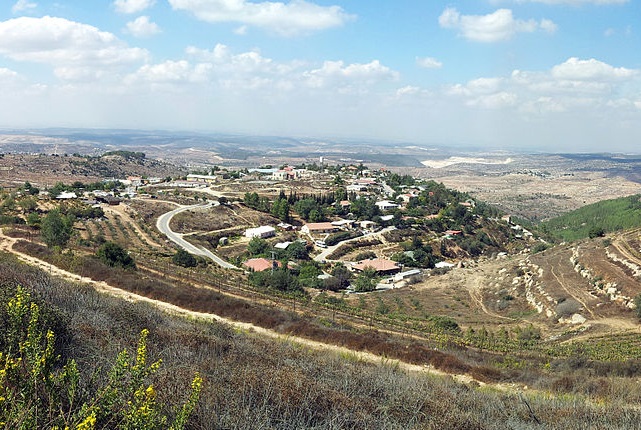
Eretz Yisrael – A Privilege, Not a Burden!

Eretz Chemdah: An Inside View – Ratzon HaShem

Ratzon HaShem

I came to learn in Eretz Yisroel after three years in Beis Medrash (post high school). I grew up in Lakewood, New Jersey, and, like most of my friends, when I came to learn in Eretz Yisroel I had no long-term intentions. I came to do the two-year Eretz Yisroel experience. Like most bochurim, this obviously included Shabbos seudos at the homes of many different types of people.

At one of those Shabbos meals, the question was posed: “How can people live in chutz la’Aretz if there is a mitzvah to live in Eretz Yisroel?”

I was put on the spot because honestly, I had never thought of it. I was indeed aware there is a mitzvah according to the majority of opinions, but somehow that all was theoretical knowledge. I totally ignored the step of applying my knowledge to my actions—I just honestly never thought about it.

After that Shabbos seudah, I decided to research the topic a little bit, until I discovered that Reb Moshe Feinstein ztz”l wrote a teshuva that there is no obligation to live in Eretz Yisroel, rather it is a mitzvah kiyumis—a mitzvah that one gets sechar for doing—but is not an absolute chiyuv to do.

I was happy. As far as I was concerned the “issue” was resolved. There is a legitimate opinion that there is no chiyuv to live in Eretz Yisroel, therefore I could live happily ever after in Lakewood. Case closed.

Sometime after that I had a conversation about this with a talmid chacham I knew. He told me something that changed my life. He asked me if, as a Yid, I saw mitzvos as a burden, or am I happy to be part of the Am Hanivchar (Chosen Nation) excited to do ratzon HaShem even if it isn’t the easiest thing. Without too much thought, I knew that the answer was the latter—a Yid has to be happy with his mitzvos and not look at it as if it is a burden.

He told me, even if we accept Reb Moshe’s view (which I understood not to be the pashtus), why does that give you the security to live in chutz la’Aretz? You have a mitzvah that is definitely ratzon HaShem to live in Eretz Yisroel, so even if it is not a chiyuv, shouldn’t you want to try to do it? He added, you don’t think it is easy? Many mitzvos aren’t easy and that just increases the sechar, as the Mishna in Avos says, “l’fum tza’ara agra.”

This talmid chacham continued to note that the many maalos of living in Eretz Yisroel mentioned throughout the Torah and chaza”l such as, “Eretz asher Einei HaShem…” meaning HaShem’s special Hashgacha Pratis in this Land or the famous gemara (Kesuvos 110b) stating the difference between one who is living in Eretz Yisroel and one who is living in chutz la’Aretz, concerning their relationship with HaShem. I once again was aware of these maalos, but somehow, I never thought about trying to apply them to my life. He asked me to forget about if it is a chiyuv or not, am I not interested in all these maalos?

I thought about this for a while and took it to heart. The reason a Yid is in this world is to do ratzon HaShem, not to look for loopholes in it. The ratzon HaShem in this case is very clear—HaShem wants Yidden to live in Eretz Yisroel.

I was just a bochur at the time, but when I started shidduchim my condition was clear. I went back to the States for shidduchim like the norm, but I knew that for the long term, I needed to live in Eretz Yisroel. My parents thought I wasn’t being rational, but they agreed I can “try” my condition for a year, and to rethink it if I still don’t find my bashert by then. A year passed and I started getting nervous, but then HaShem sent me my bashert, and B”H she agreed with my condition eagerly.

We got married B”H and started off in Yerushalayim, which was the normal place chutznikim my age lived. I continued learning in the same yeshiva I did as a bochur. My wife B”H found work for an American company through the computer. Neither my parents or my in-laws were financially supporting our stay in Eretz Yisroel, but we had Siyata Dishmaya and my wife had decent work. After a little less than a year, however, we realized that we barely could afford our budget, and this was without the added expenses that come with children. It was a hard but obvious decision: We knew we had to move out of the mainstream Yerushalayim to somewhere where the expenses were much cheaper.

After looking at the various options and spending a Shabbos here and there, we moved to the community we thought made the most sense.

B”H we are very happy, and I thank HaShem daily for letting me live my dream in Eretz Yisroel, as the gemara says, “duchta deMoshe v’Aharon lo zachu lah…” a place where even Moshe and Aharon did not merit….


Adjusting

For me, adjusting to our new community outside Yerushalayim wasn’t such a big deal. I continued learning in the same yeshiva in Yerushalayim, taking a bus every day.

For my wife, it was more challenging. We moved from a mostly English-speaking community to a building where almost nobody knew English. It took time, but eventually, she got connected to the English-speaking community there and also learned to make friends with our Israeli neighbors.

The chutznik community gave us a lot of chizuk. It wasn’t a group of people of which most were moving back after 2-3 years. It was an oylam of people doing the same thing we were doing.

– Yekusiel A., Gush Etzion

This article is part of Matzav.com’s Eretz Chemdah series featuring English speakers, living in, settling, and building up Eretz Yisroel. For more info please contact info@naavakodesh.org or visit naavakodesh.org/eretz-chemdah

Reprinted with permission from Naava Kodesh.
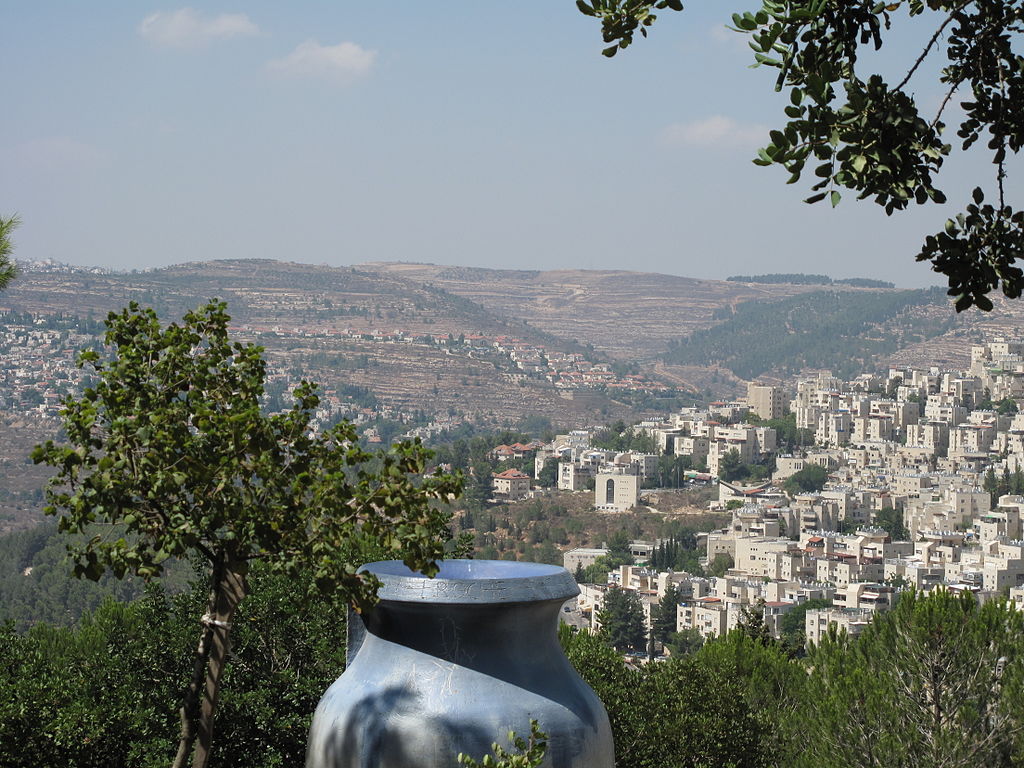
Eretz Yisrael: Subdue the Gashmiyus to See the Ruchniyus

Living in Eretz Yisroel

Eretz Chemdah: An Inside View

September 12th, 2019

Various Perspectives and Experiences of English speakers Living in Eretz Yisroel

If you had told me fifteen years ago that in 2019 I’d be living with my husband and six children, bli ayin hara, in an old three-bedroom Yerushalami apartment with no car, I would have laughed in your face. Coming from suburban America with two to three-story houses, one car per driver in the family, and a normal American lifestyle, I could never have pictured spending the rest of my life living on a kollel budget in Yerushalayim. I lived a whole ten days as a married adult in America, so I really can’t compare based on my own personal experiences. What I can share with you is how I fell in love with Eretz Yisroel and Yerushalayim in particular, and why after almost eleven years I can’t imagine moving back to the US.

My mother-in-law constantly reminds us of the original plan to go to Eretz Yisroel, learn for a few years, come back, receive smicha and a psychology degree, and maybe go into kiruv or something to that effect. Neither my husband nor I am sure exactly how it happened. We came for ten months, were zoche to have our first child, moved out of a shoebox and into a larger apartment, and the “it’s time to go home” conversation never came up. After our third or fourth child was born, we realized that the conversation never came up because we were already home.

Until you’ve experienced it yourself, it’s impossible to fully describe the way Yiddishkeit is an active part of daily life in Eretz Yisroel, and especially in Yerushalayim. The country, even summer activities, revolve around the Jewish calendar. One hears the music playing throughout the city on Erev Shabbos, listens as the siren announces that Shabbos is starting, watches as the streets empty as it gets closer to Shabbos, and then enjoys the noisy laughter as the kids play in the street all Shabbos long. Also, one knows that the big theme parks and water parks will have separate days for men and women during Bein Hazmanim. When one sees the city covered in Succahs, and with the arba minim and succah decorations sold on every corner, it brings such a sense of warmth and joy. In December, the lampposts are decked out in lights and Menorahs as opposed to trees and Xmas decorations. Two weeks before Pesach, why is that ten-year-old dragging a huge log down the street? Oh right, it’s getting close to Lag Ba’omer. What’s that music I hear? The kids all run outside to join yet another Hachnasas Sefer Torah, a common, joyful occurrence on the Har Nof streets.

I feel so blessed to be raising my kids in Eretz Yisroel, where they are growing up in a Jewish country, surrounded by a frum environment and minimal physical needs. Tuition prices are great here. Schooling for the girls is basically free and the boys’ tuition is only about $80 a month. My children’s mother tongue is Hebrew, which means that they are learning HaShem’s Torah in their native language. Torah is taught to them with such a geshmak—it’s beautiful! The girls get a double curriculum, though the boys basically just get limudei kodesh. We’ve supplemented to fill in the gaps that are important to us. I love the fact that the younger kids are off in the afternoons. I’m blessed to be working from home on a flexible schedule, so I get to spend quality time with the kids on a daily basis.

The neighborhoods are havens for kids. Schools and communities offer a variety of enjoyable after-school programming and activities for the kids. These could include programs such as sports teams, arts, music, and others. Concerts and puppet shows are arranged for all the big vacations and even during the school year. When the boys come home after a long day of learning, the lobbies turn into soccer fields and the sidewalks are their bike paths. Within a five-minute walk from my apartment there are four large parks and so much space to play jump rope, hopscotch, and any other game the kids can dream up.

Israeli kids are super independent. By the age of eight, my kids run over to the supermarket to get ice cream and can go to the candy store all by themselves (all of which happen to be across the street). Being that the schools here are all within walking distance, it’s quite common for the older children to pick-up/drop-off the younger children, which is helpful if you don’t have a car.

Coming from an out-of-town community, it took me a while to adjust to having sixteen families living in my building, thousands of frum people living on my block, and tens of thousands in my community. After a bit of time though, I developed my own community. On a daily basis, my neighbors and I borrow and return items, whether it be food, last-minute baking supplies, clothes, baby Tylenol for the grandchildren who came to visit, or even the last-minute bathing cap for a school swim trip.

Aside from the fact that you can now get most American products in Eretz Yisroel, I’ve also found that like any diet, after time on that diet you lose your craving for the forbidden foods. I’m no longer craving or even needing extra padded Q-Tips or three-ply toilet paper. Through living a less gashmiyusdik life in Eretz Yisroel, you’re really zoche to see the shining light of HaShem and the ruchniyus involved in your daily life.

Snowstorm Weekend

About five years ago in Yerushalayim, there was a huge snowstorm on a Thursday. The entire city shut down. Right across the street from our building is a large supermarket. The workers could not get home, so they slept in the store that night, which was amazing for us, as they were one of the few stores in the whole city that was open on Erev Shabbos. No cars could get out because, unlike America, Eretz Yisroel gets so few large snowstorms that it’s not worth the money to invest in snowplows. Eventually, they used some tanks to clear the main roads. So, on that Friday, many of my neighbors were totally homebound. Being elderly, they could not brave the walk across the street in over a foot of snow. My sweet neighbor made Challah for every family in the whole building so that they would all have Challah for Shabbos! Another neighbor had a Sefer Torah, so all the residents in the building davened together for all of the Shabbos tefillos without needing to venture outdoors. It was a very special, only-in-Eretz Yisroel type of weekend! 

– Bashi Rosen, Har Nof, Yerushalayim

This article is part of our Eretz Chemdah series featuring Anglo-Chareidim living in, settling, and building up Eretz Yisroel. A joint project of Avira D’Eretz Yisroel, Kedushas Tzion and Naava Kodesh, coordinated by Yoel Berman – yoel@naavakodesh.org.

Reprinted with permission from Naava Kodesh.
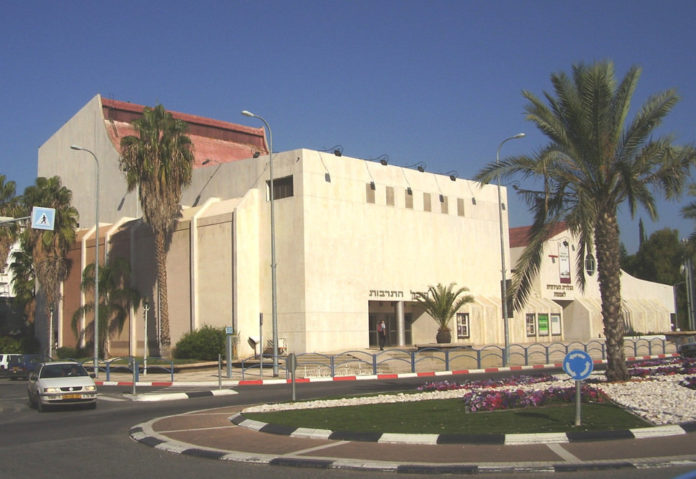
Making Aliyah? Consider Givat HaMoreh

Eretz Chemdah: An Inside View

Various Perspectives and Experiences of English speakers Living in Eretz Yisroel

Paving the Way

I am the youngest of eight siblings. We all grew up in England, and all of us ended up here in Eretz Yisroel for a few years of married life. That was the original plan—to be in this environment conducive to shteiging for a few of the formative years of life.

Most of my siblings had managed to make it here for at least two to three years before heading back to England. Finding that Yerushalayim was prohibitively expensive for a kollel couple, we had to think of an out-of-the-box solution for the longer term. Although we were still keeping two days of Yom Tov, we weren’t quite ready to leave Eretz Yisroel.

The new Litvish community in Givat HaMoreh, Afula, was the unlikely candidate. At the time we joined, there were about a hundred and fifty families, who, for the most part, were Israeli. The few English families that were there were mostly related to each other (and not to us), but it meant that there were enough people from a background similar to ours so as not to feel totally isolated. There were also a few Americans, as well as some English-speaking children of Anglo immigrants to Eretz Yisroel. Being that the Israeli members of the kehillah—almost all young couples like ourselves—were also far from their hometowns and “natural habitats,” they were more open to create new relationships with people a bit different from themselves, like us chutznikim. This was true even in regards to my wife, who at the time we came could barely speak in Hebrew.

Although the environment in Afula meant moving quite a bit out of our comfort zone, one thing that brought us here was the prospect of taking part in the creation of a new kehillah in Eretz Yisroel. That wouldn’t have been enough to make us stay, though—it took a while even here until we quit Yom Tov Sheini. Both my wife and I had almost all our family back in England, so we didn’t have any of the natural physical and emotional support that comes with living near family. We were basically staking it out alone in the wilderness, at least in the beginning.

Being a small community with most members not having family close by, this fostered an environment of mutual care and responsibility. This made up to some degree for the lack of family living close by. Having people around us who care about us was definitely a cause in the eventual shift to the realization that we are here to stay. This was in addition to the fact that the affordable housing here meant it was possible for us to seriously consider purchasing a home here, which would surely make our connection to this place much stronger.

Having lived here for about three years, we have come to appreciate our neighborhood and community. Members of the kehillah live peacefully with the surroundings, including traditional and not-yet observant neighbors, with some of them becoming inspired by the kiddush HaShemwe make as frum Yidden and decent people. The unfortunate occurrence of cars driving on Shabbos is not uncommon, considering we do live in a mixed neighborhood, but it is considerably less than what may sometimes be seen at the edges of some Chareidi neighborhoods of Yerushalayim, as this is a quiet neighborhood.

As far as chinuch is concerned, the local Chareidi cheider and school caters to a wide spectrum of backgrounds, including the diversity of the “Litvish” kehillah itself, which includes Bnei Torah who are Ashkenazim, Sephardim, Teimanim, and a bit of Chassidish-oriented as well, and both Israelis and chutznikim. The Chareidi populace of the general area, many of whom also attend these schools, includes also a few Chassidim as well as Sephardic baalei batim, which are very common to come across in these areas. The exposure to children from the homes of Yirei Shomayim from all different Chareidi backgrounds is, I think, an added benefit to the high scholastic standards of the schools.

After we settled here, others have considered following our path. My wife has a friend who eventually moved here with her husband, both originally from England, and I think it was much easier for them to make the move following our example. Of course, we also benefitted from their move as it meant having more people around us with whom we more closely identify, who speak the same language as we do, and share a similar mentality with us. We have a cousin from England who joined us here as well, and having us as cousins here already must have been a factor in their decision as well.

The kehillah now numbers about three-hundred families, bli ayin hara, kein yirbu, and although it seems that the kehillah will definitely stay a predominantly Israeli one, there is definitely room for us chutznikim who want to join and be a part.

Although in the beginning we had to move a bit out of our comfort zone, it has become our very own zone, and we are quite content with it—our own little piece of Eretz Yisroel.

Why Didn’t We Know About This?

One of the chutznik families here in Givat HaMoreh manage an apartment here that is rented out for weekends and short-term to vacationers.

A friend of mine was planning on terminating his stay in Eretz Yisroel, as it was just too expensive for him to stay being an avreich here. He decided to end his stay here with a weekend vacation and rented that apartment for a Shabbos.

After being exposed to the warm and fully functional kehillah here, and realizing that there were more English families here than only my own, he told me that it just never occurred to him that such communities existed where he would be able to afford staying here as an avreich. He was mistakenly comparing the finances of chutz la’Aretz to only Yerushalayim and its surroundings.

– Yehuda Orzel, Givat HaMoreh, Afula

This article is part of Matzav.com’s Eretz Chemdah series featuring English speakers, living in, settling, and building up Eretz Yisroel. For more info please contact yoel@naavakodesh.org or visit naavakodesh.org/eretz-chemdah

Reprinted from Naava Kodesh.

Rabbi Pinchas Winston’s Eretz Yisrael Experience

Eretz Chemdah: An Inside View

Various Perspectives and Experiences of Anglo-Chareidim Living in Eretz Yisroel

Soul Connection

When I came to learn at a yeshivah in Yerushalayim in 1982, it was only for a year. At that time, the Land was still quite foreign to me, as I was used to life back in Canada. I was just more comfortable living on the other side of the ocean.

That quickly changed over the course of the year, and I had come to love being in Eretz Yisroel, becoming more connected to the Land and feeling so much closer to Hashem. It was the place to be Jewish, so I chose to stay here another year—which led to another year. By the fourth year, it was clear to me that I wanted to live in Eretz Yisroel, and I made that clear as well when I started shidduchim.

I was married in 1985, and we first rented an apartment in the Old City to be close to my yeshivah. I started working part time and learning part time while my wife did some secretarial work for a local hotel. To make additional money, I also helped a rabbi transcribe his classes that he had planned to publish in book form.

In our second year of marriage, we moved to the Har Nof neighborhood in Yerushalayim. Unlike our apartment in the Old City, this one was unfurnished, which presented a problem since we did not have the money to furnish it ourselves. Then came the miracle. Another couple who had decided to return to North America asked us to use their furniture while they were gone so that they didn’t have to put it in storage. Their furniture was quality made and included a Maytag washer and dryer. Overnight we had a fully furnished apartment at no cost.

A job opportunity opened up for me in Canada around 1988, which I took in order to make money quickly so I could at least make a deposit on an apartment in Eretz Yisroel. We did not return until 1993, by which time we had purchased a home in a place called Telz-Stone (about 12 minutes outside of Yerushalayim, off the Tel Aviv-Yerushalayim highway). Originally, I had wanted to live in Yerushalayim, but we were able to get more value for our money in this new area. We have loved it here ever since.

I had part-time teaching jobs while I wrote books on Torah philosophy full time. This would not have been so promising had the Internet not become so available, changing the way people do business. Once upon a time, you had to bring your product to the market. Now you could do that from your home, even thousands of miles away from other people. The market could come to you even if you weren’t there. I run an American non-profit organization from my home in Eretz Yisroel, managing everything through the Internet. Thanks to Skype, I can even make low-cost long-distance phone calls.

I have Skyped my parents on a daily basis for many years already, and we can talk to each other face-to-face through our computers. It doesn’t replace being together in person, but it is a great second to this. I have remained close to them, learning with them and others over Skype or similar video conferencing platforms, making the distance between us seem quite insignificant. When used properly, technology is a tremendous asset and provides us with so many opportunities. It is far easier to live in Eretz Yisroel today, now that one can still maintain connections that are thousands of miles away.

That’s especially important to me, because now when I leave the Land, I am like a fish out of water. I have a soul connection with this Land, and I derive so much life from it. I have a sense of inner peace that I never had living abroad. You don’t need the same material things here that you felt you needed while living outside the Land. The sense of personal fulfillment I feel while living here more than compensates for them.

Now, when I see all the construction and improvements being made in the country, it is even more exciting. We may look at this as the way of any expanding country, but historically it represents more than that. Hashem runs the world and He is behind everything. He seems to be preparing for something great, and I am grateful to be living here as it happens. Though it’s not about avoiding struggle, as yisurim are part-and-parcel of life everywhere in this world. It’s about working hard for the things you value most and keeping the things that matter most to you. For me personally, Eretz Yisroel has been worth every challenge that I have had to deal with while being there, because I am where I believe I need to be and WANT to be.

The Bottom Line

Eventually, I wrote a book about the importance of settling in Eretz Yisroel today. It was really about the centrality of Eretz Yisroel in Torah growth, which points to the importance of at least doing what one can to move here. It was based upon another important sefer called “Tuv HaAretz,” writings from the Arizal about the Land. The bottom line is that Hashem is everywhere, but as the gemora says, this is the place where we connect to Him the best. Learning Torah and performing mitzvos comes alive in Eretz Yisroel, as does the history of the Jewish people. There’s nothing like it anywhere else in the Jewish world.

– Pinchas Winston, Telz-Stone

This article is part of Matzav.com’s Eretz Chemdah series featuring Anglo-Chareidim living in, settling, and building up Eretz Yisroel. A joint project of Avira D’Eretz Yisroel, Kedushas Tzion and Naava Kodesh, coordinated by Yoel Berman – yoel@naavakodesh.org.

Republished from Matzav.com.